FINAL FANTASY VII REBIRTH brings the second game in the now-trilogy, remaking and revamping the beloved JRPG classic for a new generation on Nintendo Switch 2. Learn more in our FINAL FANTASY VII REBIRTH review!
FINAL FANTASY VII REBIRTH brings the second game in the now trilogy that remakes and revamps the beloved JRPG classic for a new generation on Nintendo Switch 2. The planet’s energy source, the lifestream itself, is being corrupted by the evil Shinra Electric Power Company. It’s being processed and transformed into what is known as Mako. It’s up to AVALANCHE – a.k.a. the Resistance – to try to put a stop to their plans before it’s too late. You’re Cloud Strife. Sure, you started out as a mercenary for hire, taking on a rather dangerous gig, but after everything you and those around you have been through, there’s now no turning back.
Plot twist: Cloud Strife is a former member of SOLDIER. SOLDIER is the elite private military of the Shinra Electric Power Company. FINAL FANTASY VII REBIRTH follows straight after the events from FINAL FANTASY VII REMAKE INTERGRADE, which SQUARE ENIX released on the Nintendo Switch 2 earlier this year. That Nintendo Switch 2 release includes the base FINAL FANTASY VII REMAKE experience, as well as the INTERGRADE DLC – a standalone story also known as FF7R EPISODE INTERmission, that follows Yuffie Kisaragi – wrapped into a single package. For this sequel, we’re finally getting a chance to leave Midgar, setting out on an adventure that will take the group around the planet, up until their arrival at The Forgotten Capital. Also, Chocobos.
Are you new to Final Fantasy VII and the series as a whole? Then it’s time for a history lesson! The Final Fantasy series got its start way back in 1987 for the Nintendo Famicom – that would be the Japanese counterpart to what we know as the Nintendo Entertainment System, a.k.a. the NES. If one is to be honest, what would became a beloved JRPG and the start of a decades-long franchise was created as a bit of a final ditch, hail mary to try and save the company that was then known as SQUARE – yes, before it was SQUARE ENIX, SQUARE was one company, and ENIX was another one, best known for the Dragon Quest/Dragon Warrior series.
The game was later released in North America in 1990 for the NES, and between the sales in Japan and those in North America, it became a huge success. That game was later ported to a bunch of portable and home consoles, including the WonderSwan Color, the PlayStation, and Game Boy Advance, before being re-released as part of the Pixel Remaster series alongside Final Fantasy II and all the other games up to Final Fantasy VI, which were released originally released on the Famicom and the Super Famicom, with Final Fantasy IV turning into Final Fantasy II in North America, and Final Fantasy VI becoming Final Fantansy VI. It was years and years of SQUARE releases only for Nintendo hardware, making JRPG fans who were also Nintendo fans extremely happy. It’s with Final Fantasy VII that everything changed.

Back in the day, SQUARE was working on Final Fantasy VII for the Super Famicom/Super Nintendo Entertainment System. Due to some delays in the game’s production, development was shifted to the new console from Nintendo as a test, and this is how we got to see the 1995 tech demo for the then-called Ultra 64 (which would, as the name suggests, turn into the Nintendo 64). The cartridge format for the console was, unfortunately, a deal-breaker for SQUARE, which decided to move production to Sony’s PlayStation console, a console that existed only because Nintendo had worked with Sony on a CD add-on for the Super Famicom that was ultimately shelved.
Flash forward to 1997, when Final Fantasy VII was released first in Japan and later on in North America and Europe. Saying that Final Fantasy VII was a hit is a bit of an understatement. After spending what was reported as a whopping $80 million for the game’s development and marketing campaign, Final Fantasy VII was pushed hard by SQUARE and their new partners at SONY, with huge displays in every single video game and toy store in the world. Magazines had full-page ads and ran many articles and interviews leading up to the game’s release. By the time it finally landed, expectations were sky-high, but the game managed to deliver.
It took the fantasy part of the previous six games and expanded on it while adding a ton of sci-fi and steampunk elements on top, all while bringing us eye-melting cutscenes and a soundtrack that felt more at home on a feature film than a video game. It’s because of this that the game shipped in not one, not two, but THREE CDs, in a chunky jewel case that also included a gorgeous game manual. If you want to give that version a go, there’s always the option of buying Final Fantasy VII on the Nintendo Switch, which bumps up the overall resolution while adding some extra quality-of-life improvements. This meant that Final Fantasy VII and up to the recent Final Fantasy XVI from 2023 would be only on PlayStation hardware at launch – you know, minus the online MMORPG games, and Final Fantasy XV, which also released on Xbox One day-and-date.
20+ years later, we got FINAL FANTASY VII REMAKE from SQUARE ENIX on PlayStation 4 as a reimagining of the Midgar portion of the original release. This was followed by an enhanced port for PlayStation 5 a year later, which included the base game, as well as the aforementioned FF7R EPISODE INTERmission episode with Yuffie. This was followed by FINAL FANTASY VII REBIRTH in 2024, which was not released on PlayStation 4. It’s now 2026, and it’s time for Nintendo Switch 2 owners to take FINAL FANTASY VII REBIRTH for a spin. Yes, there have been some cuts made here and there for the game’s graphics to get it up and running as smoothly as possible on Nintendo’s current-gen hybrid console. Yes, it still feels like witchcraft.
Before we talk about the game’s combat and other gameplay systems, let’s go over what is different in terms of graphics, framerate, and lighting. The main gameplay content remains the same between the PlayStation 5 and Nintendo Switch 2 versions. And while the graphics certainly look better on PlayStation 5 – and PlayStation 5 Pro – for the most part, the differences are not going to be as noticeable as, say, comparing a PlayStation 5 game to its counterpart on the original Nintendo Switch hardware.

First up, the game’s framerate and resolution. The PlayStation 5 version of the game offers two options: Performance Mode and Graphics Mode. Performance Mode aims to target 60 frames per second while lowering the overall resolution. This means that Graphics Mode lowers the framerate to 60 fps, but the resolution is bumped up to 4K. For the Nintendo Switch 2 version, we’re only getting the 30 frames per second option with dynamic resolution based on how busy things are, which does affect the framerate at times with some dips when things are a bit crazier.
Thanks to the use of DLSS, the Nintendo Switch 2 ends up doing a lot of heavy lifting to bring us a sharper and smoother experience that goes up to 1080p when playing in Docked Mode. It’s similar to how FINAL FANTASY VII INTERGRADE handled things on Nintendo’s hardware, with noticeable cuts now made when outdoors with lower foliage and dialed-back lighting. On top of that, DLSS does make the hair look a bit… specific, to say the least. Again, we’ve experienced this with the first part of the FINAL FANTASY VII expanded trilogy, so it’s nothing new.
The thing is that the PlayStation 5 – at least the base model – is a huge behemoth of a home console that can consume, on average, around 200-220 watts when playing a game. It also has 16 GB of GDDR6 SDRAM. The Nintendo Switch 2 is a hybrid console that is the size of a small tablet, and it can be played at home in Docked Mode or on the go in Portable or Tabletop Mode. It has 12 GB LPDDR5X and draws around 10-12 watts when in Portable or Tabletop Mode and 25 watts when in Docked Mode. That’s roughly 1/12th of the power consumption when comparing the PS5 to the Nintendo Switch 2. Again, witchcraft.
If you’ve played the PlayStation 5 versions of the game – or start to look at specific side-by-side comparisons- you’ll begin to notice that some areas in town have removed foliage and less detailed railings, or that, as was the case for the prequel, a big chunk of the silverware and other decorative stuff indoors is now MIA. Sure, you’re going to be missing a potted plant here, a framed photo there, some vases and candlesticks, vegetables might be more angular than you’d think, and book collections might have been halved on bookshelves, but the characters and what remains will still pop with greater detail. Dynamic shadows remain as well, which certainly helps to bring this world to life. While NPCs in areas remain, the team has decided to cut in half or completely stop their animations if you’re not near them, in order to maintain the framerate. There’s going to be some pop-in as well to consider while exploring, especially in the overworld.
The game offers three difficulty settings: Easy, Normal, or Dynamic. The Easy difficulty setting will allow you to enjoy the game’s story without having to worry too much about battles. The Normal difficulty setting is the one recommended for playing through the game. As for the Dynamic difficulty setting, it will automatically adjust enemy difficulty based on your skill level, which means you’ll always need to be ready to give it your all in each fight.
Oh, and as was the case for FINAL FANTASY VII REMAKE INTERGRADE, you’ll be able to choose either to start a New Game with the default settings for character levels and inventory, or go with the New Game – Head Start option. The second one will allow you to start the game with high-level characters and a ton of gil, armor, materia, and other items, thus instantly boosting your progress and speeding up how quickly you’ll be able to go through each area.
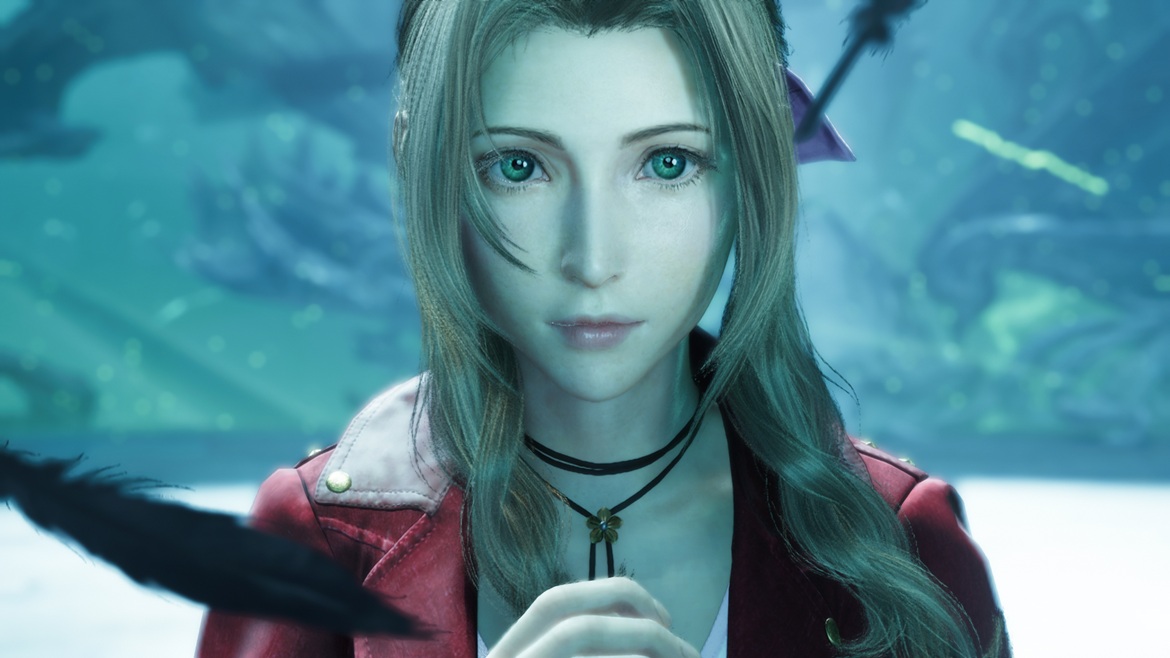
You’ll be taking control of a leader character by using the left analog stick, as you use the right analog stick to move the camera around you as needed. Pressing the Y button will allow you to use your weapon to strike at boxes marked with the Shinra logo to break them open. This way you’ll be able to collect mako shards to restore a bit of your MP, or find useful items like Mega Potions, Ether, or Elixirs.
And now, onto the combat! The original Final Fantasy VII used a turn-based Active Time Battle (ATB) system in which each of your party members had special meters that filled up at a steady pace. Once a party member’s meter was full, it would be able to take its turn, choosing from attacking, using magic, summons, items, or using the powerful Limit Breaks. For the FINAL FANTASY VII trilogy, this has changed into a mix of real-time combat with ATB that feels closer to, say, the combat in the beloved Kingdom Hearts series.
Pick between Active or Classic. Active is the standard option that will allow you to fully take control of all actions in battle. Classic will dial things back a bit, with actions that are performed automatically so that you can focus on executing commands. During combat, pressing the Y button will use a character’s main weapon. Pressing in on the right analog stick in combat will allow you to lock onto a specific enemy. You can then use the right analog stick to switch between targets.
The ATB bar will fill up at a steady pace over time. Dealing damage to enemies will fill up their ATB bar at a faster pace, so that they can use abilities or magic. Pressing the A button will open up the command menu where you can spend ATB charges. It’s from there that you will be able to launch powerful attacks or use magic spells to heal your party members’ wounds or launch fireballs or ice at enemies – more on these in a bit.
You can press the R button to block incoming attacks, or you can press the B button to perform a roll to move out of harm’s way. Blocking an attack will lower the damage a character will receive, and it will also fill up the ATB a bit. If you manage to perform a perfect block, then the attack from your enemy will be completely nullified.
Characters will have unique abilities that can be triggered with the X button. For example, Cloud can switch fighting modes when in combat, going from Operator Mode to Punisher Mode and back. Operator Mode is a more balanced option that will allow you to deal good damage as you swiftly move around the area. Punisher Mode is going to be more offense-oriented, lowering Cloud’s speed while unleashing mightier attacks. This will also allow Cloud to release a counterblow every time he blocks a melee attack. Punisher Mode won’t let Cloud guard against ranged attacks or magic attacks.
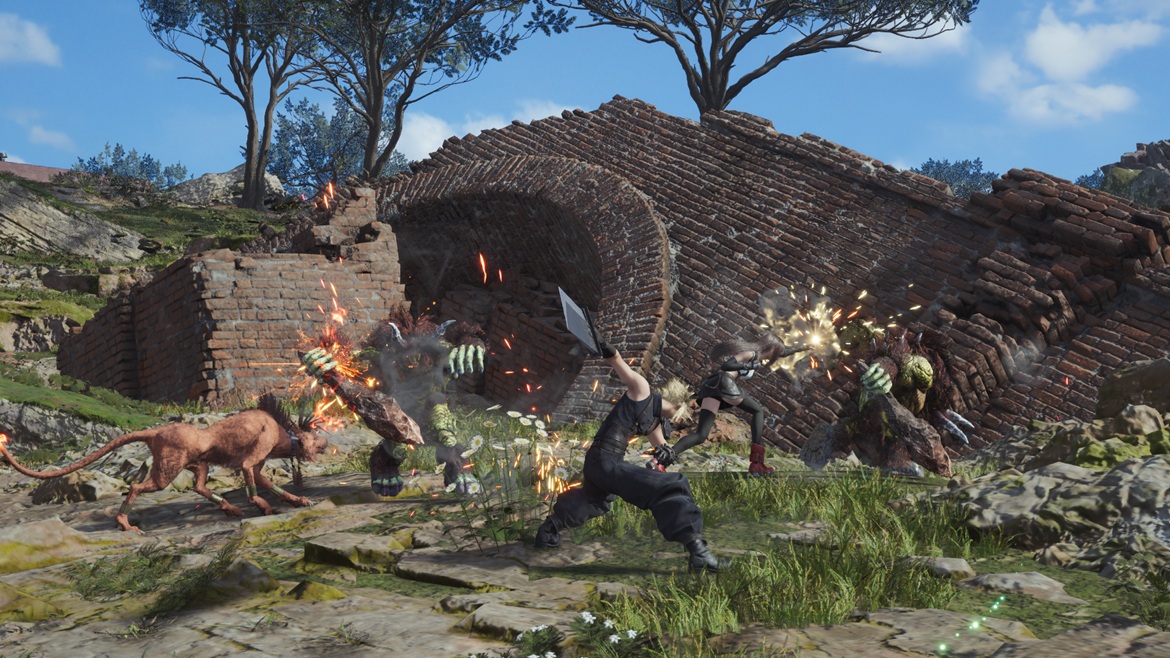
Since you’ll be overseeing the actions of a group of characters, you’ll be allowed to switch between them in battle by pressing left or right on the D-Pad. You can also press the ZL and ZR buttons to issue commands to your allies. They will also be able to act on their own and aid you. Back from FF7R EPISODE INTERmission is the Synergy system. This will allow you to have two party members act together as they focus their efforts, actions, and attack types on one enemy. While guarding, you can perform Synergy Skills with your allies. These will differ depending on which character is currently being controlled, but they’ll certainly prove to be useful. As an added bonus, Synergy Skills won’t consume ATB charges.
If you manage to deal enough damage to an enemy or make the most of exploiting their elemental weaknesses, then you’ll manage to place them in a Pressured state. This will make it easier for you to fill up the Stagger gauge located below their HP bar. Once the Stagger bar is full, the enemy will be momentarily staggered, thus leaving them completely defenseless for a short window of opportunity. You can use the Assess ability to learn more about an enemy’s elemental weaknesses and other vulnerabilities.
Materia will be the key to using magic spells. You must collect and equip Materia to your available slots so that you can gain access to magic spells to use during combat. Materia will gain Ability Points (AP) with every battle. Once enough AP is accumulated, Materia can be leveled up in order to unlock more powerful spells for your party members to use to aid your mission.
Take, for example, the Healing Materia. Equipping the Healing Materia will allow you to use Cure, a low-level but useful spell that can heal your wounds to recover some of your lost HP. Leveling it up will unlock Cura, Regen, and Curaga, in that order. Equipped an Ice Materia? Then you’ll start with Blizzard and will be able to level it up to unlock Blizarra and Firaga. There’s also Materia that will boost your character’s stat value, such as HP Up Materia. Some Materia can also be linked up to boost its effects.
Summons are very special actions that will call upon the power of the gods to fight alongside you. You can unlock them once you enter the open world and complete a specific tutorial battle. Summons require that you have the corresponding Materia and that you equip it to one of your characters. Since they’re very powerful, you won’t be able to use them as you please, as that would give you an unfair advantage over your opponents.
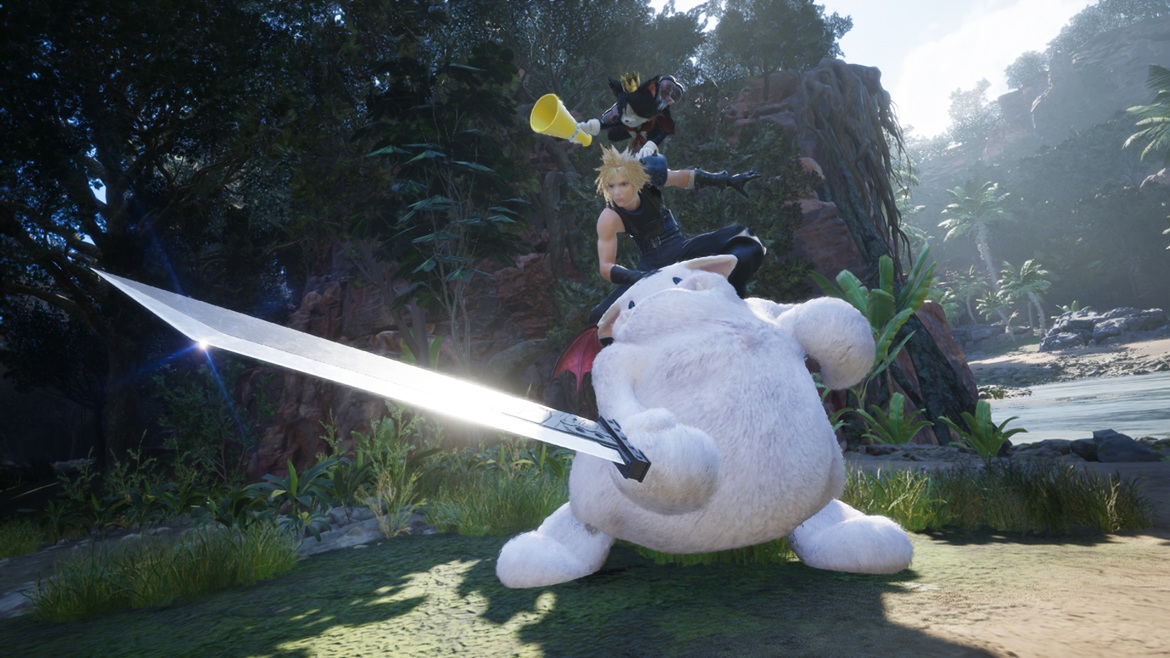
Once you’ve obtained a Summon Materia – you know by progressing through the story or defeating the corresponding entity – you’ll be able to call upon their aid by filling out the gauge and spending the required ATB. Summons are only available during more challenging battles when you’re going up against stronger foes, so, you know, most of the time that’s going to be bosses.
You’ll be using SP in this game to further improve your party members. You’ll need SP to unlock nodes that grant them new skills, abilities, and boosts, as well as additional Synergy combinations to maximize your party’s formation. Taking Cloud as an example, you could spend 5 SP to unlock the Firework Blade to combine Aerith’s magic with his weapon to launch a ranged attack. After this, you gain access to the Powerful Punisher node, which, after spending another 5 SP, boosts the strong attack damage in Punisher Mode by 3%. Cores are linked, so you’ll need to unlock the previous one in the chain if you want to unlock the next one in a specific segment. Each character will have different nodes for you to unlock, so be sure to make the most of your SP!
FINAL FANTASY VII REBIRTH brings the second game in the now trilogy that remakes and revamps the beloved JRPG classic for a new generation on Nintendo Switch 2. The planet’s energy source, the lifestream itself, is being corrupted by the evil Shinra Electric Power Company. It’s being processed and transformed into what is known as Mako. It’s up to AVALANCHE – a.k.a. the Resistance – to try to put a stop to their plans before it’s too late. You’re Cloud Strife. Sure, you started out as a mercenary for hire, taking on a rather dangerous gig, but after everything you and those around you have been through, there’s now no turning back. Plot twist: Cloud Strife is a former member of SOLDIER. SOLDIER is the elite private military of the Shinra Electric Power Company!
The DLLS from the Nintendo Switch 2 ends up doing a lot of heavy lifting for this release, but it’s done wonderfully since it helps to bring a sharper and smoother experience that goes up to 1080p when playing in Docked Mode. Yes, the hair still looks like DLSS hair. Yes, some stuff has been removed here and there to make the game be able to target 30 frames per second. You might spot some missing vases and potted plants, or notice how someone’s book collection has suddenly been cut in half. Or that the foliage in the overworld is a bit scarce, and how it ends up popping up as you move.
But let’s not forget this is running at what a PlayStation 5-only release up until this point, going from a home console that draws 200-200 watts when gaming to the max 25 watts of Nintendo’s current-gen hybrid console was. The game also makes great use of the HD Rumble 2 of the Joy-Con 2 to accentuate actions, which is certainly appreciated.

If you have Nintendo Switch 2 save data for the FINAL FANTASY VII REMAKE INTERGRADE main story, then you’ll get the Leviathan -Summoning Materia as a bonus. If you also have save data from FINAL FANTASY VII REMAKE INTERGRADE INTERmission, then you’ll receive the Ramuh Summoning Materia.
https://www.nintendo.com/us/store/products/final-fantasy-vii-rebirth-digital-deluxe-edition-switch-2/
FINAL FANTASY VII REBIRTH launches tomorrow on Nintendo Switch 2 with a $49.99 price tag. There’s also the FINAL FANTASY VII REBIRTH Digital Deluxe Edition for $69.99, which, along with the base game, also includes the following:
• Summoning Materia: Magic Pot
• Accessory: Reclaimant Choker
• Armor: Orchid Bracelet
• FINAL FANTASY VII REBIRTH Digital Art Book
• FINAL FANTASY VII REBIRTH Digital Mini Soundtrack
https://www.nintendo.com/us/store/products/final-fantasy-vii-rebirth-switch-2/
If you hurry up and pre-order the game today on the Nintendo Switch eShop, then you’ll also receive the following bonuses:
• Summoning Materia: Moogle Trio
• Summoning Materia: Posh Chocobo
• Armor: Shinra bangle Mk. II
• Armor: Midgar bangle Mk. II
https://www.nintendo.com/us/store/products/final-fantasy-vii-switch/
Want to experience the original version of Final Fantasy VII? Then you can go and get the Final Fantasy VII port on Nintendo Switch, which brings the original PlayStation JRPG to Nintendo’s console with the following extra features:
◆ 3x speed mode
◆ Ability to turn battle encounters off
◆ Battle enhancement mode
Disclaimer
This FINAL FANTASY VII REBIRTH review is based on a Nintendo Switch 2 copy provided by SQUARE ENIX.

